I Spent Most of My Life Not Liking Mushrooms
And then, somewhere around year forty-five, I changed my mind. This is the story of the new book.
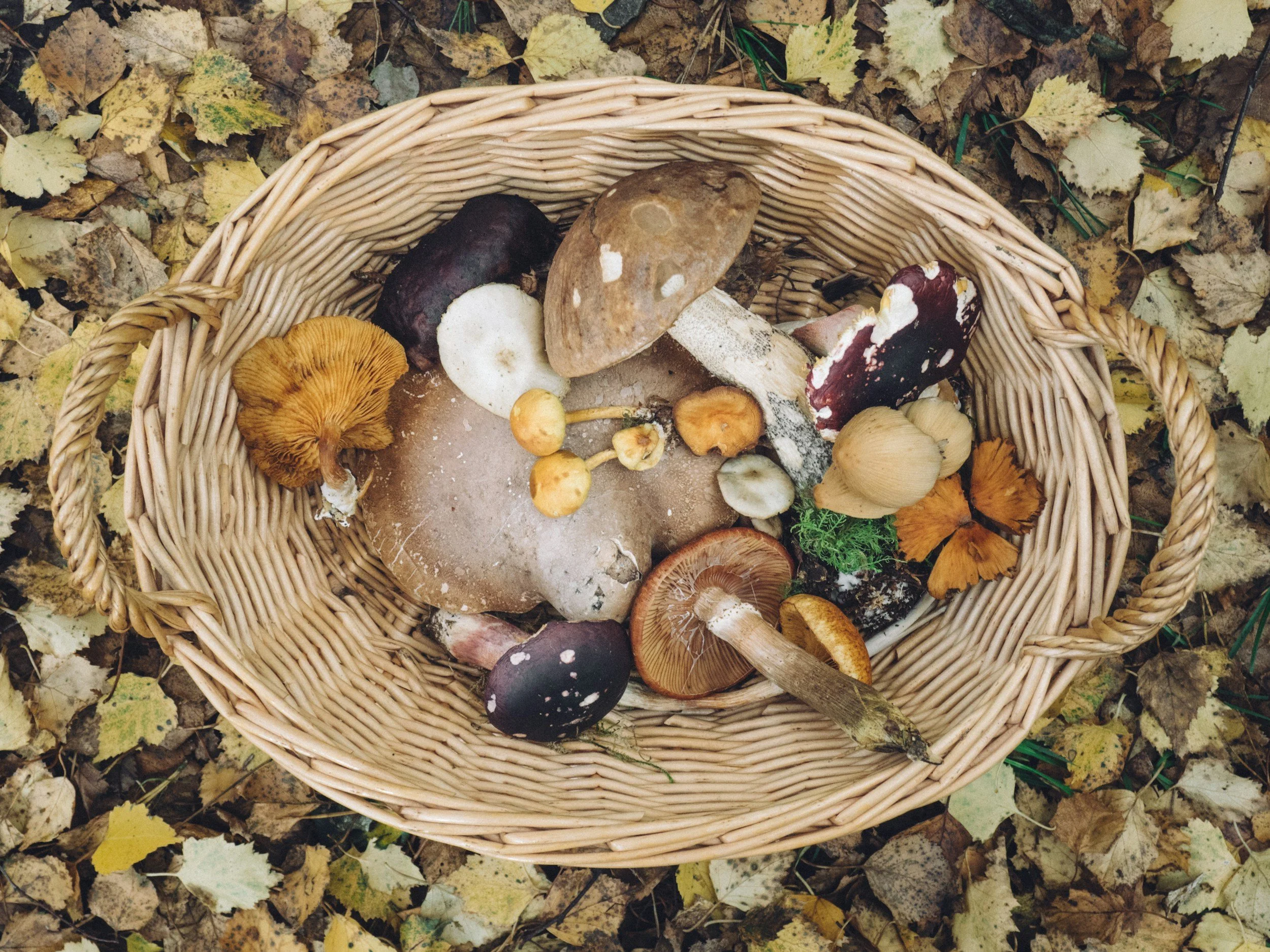
I grew up picking mushrooms and not eating them.
In the summers my parents and their friends would go out a few times a season, and the children went along because that is what children did. Nobody sat us down and taught us anything. You simply absorbed it, which mushrooms grow under which trees, which ones you carry home and which ones you leave exactly where they are. We simply knew, the way you know when plums are ripe.
And then we would come home with baskets of them, spend the whole afternoon cleaning them, and I would eat almost none of it.
There was one exception. A white mushroom whose name I have genuinely forgot, which my mother fried with bacon and finished with pecorino on top. That one I loved. Even then I understood perfectly well why: it did not taste of mushroom at all.
That was true for a long time. Decades, if I am honest. I still cooked them, because my family liked them, the plain creamy mushroom soup, and the mushroom chicken when I had to. But I was cooking them the way you do a chore.
What changed
I wish I could tell you there was a moment. There wasn't. Somewhere in the last year or two, partly out of curiosity and partly because my palate had quietly changed , I started to want them.
Living in Vienna made it easy. If you have never been there in Eierschwammerl season, it is difficult to explain, every market stall, every restaurant blackboard, the whole city gone yellow for a few weeks. (Germany calls them Pfifferlinge. In English they are chanterelles.)
And standing in front of a crate of them one morning, I remembered my mother's pantry. Jars of exactly these, preserved in salt for the winter, lined up neatly on the shelf and waiting to be used. That was where the Sunday mushroom chicken came from. Easy, generous, enough to feed everybody, and far better than the effort it asked of her.
It took me roughly forty years to come back to that recipe. It is in the book. The new book I’m working on.
What I found when I went looking at the research
Here is where I have to be careful, because mushrooms attract a lot of enthusiastic nonsense.
The claim you see most often is that mushrooms are good for blood sugar. So I went and read the trial everyone points at. It is a good one, a proper double-blind crossover study in adults with impaired glucose tolerance, using a substantial dose of dried oyster mushroom powder. And it found real things: GLP-1, one of the gut hormones involved in feeling full, was meaningfully higher afterwards. Free fatty acids were lower. People reported themselves 22% less hungry.
Glucose and insulin did not differ significantly at all.
I have not seen anybody quote that last sentence, and it is in the same abstract as the rest. It does not make mushrooms less interesting. It makes them interesting for a different reason than the one being sold.
What did hold up, and rather well, was something less glamorous. In a year-long trial, people who swapped mushrooms in for red meat at one meal a day lost noticeably more weight than the group who carried on as normal, and saw better numbers across several other measures too. Not a compound. Not a mechanism. Just a satisfying, savoury, low-energy-density thing put where some of the meat used to go.
And the finding I have actually used most in my own kitchen has nothing to do with health at all. Mushrooms are naturally rich in the compounds behind savoury flavour, and when researchers replaced some of the beef in familiar dishes with finely chopped mushrooms, cooks could cut the salt substantially and nobody rated the food as less tasty. That is a practical tool, not a theory. I now keep a jar of dried mushroom powder next to the salt.
I will also tell you the least convenient result I found, because leaving it out would be dishonest. When researchers added a generous daily serving of mushrooms to an already-healthy Mediterranean-style way of eating, most cardiometabolic markers did not budge.
Which is, I think, the correct conclusion about mushrooms: they are a food, not an intervention. They will not overhaul anybody's bloodwork on their own. What they will reliably do is make a plate more savoury, more filling and more fibrous, and push something faster-releasing off it.
That is worth doing three times a week for the rest of your life. It just isn't a headline.
Three things that made mine taste better
Get the pan properly hot before they go in. This is the single biggest difference between good mushrooms and grey ones, and it costs nothing.
Don’t crowd it. Mushrooms are mostly water, and too many at once means that water can’t evaporate, so they poach in it instead of browning. Cook in two batches. It takes four extra minutes and changes the result completely.
Don’t soak them. They absorb water, and will not brown. Brush them, or wipe them with a damp cloth.
One more, which is free and slightly magical: mushrooms make vitamin D from direct sunlight, the same way we do. Slice them, lay them gill-side up on a tray, and leave them on a sunny windowsill with the window open for an hour before you cook. A German study found 100g of sliced mushrooms in fifteen minutes of midday summer sun generated a genuinely useful amount of vitamin D2. It is not a substitute for whatever your GP has advised, particularly in a British winter. But it is a lovely thing to do with a tray and a windowsill.
The book
The Mushroom Kitchen is thirty metabolically balanced recipes and an honest chapter about what the research does and does not show. It will come out on August 26th.
There are breakfasts, soups, small plates, a long chapter of chicken and meat, fish, vegetarian mains, and two store-cupboard things you make once and use for months. Every recipe carries a short note explaining why it works the way it does, and a practical tip about pairing, sequencing or technique. There are no calorie counts and no macros to tally anywhere in it. There is a full chapter of dairy-free, gluten-free and vegan swaps at the back.
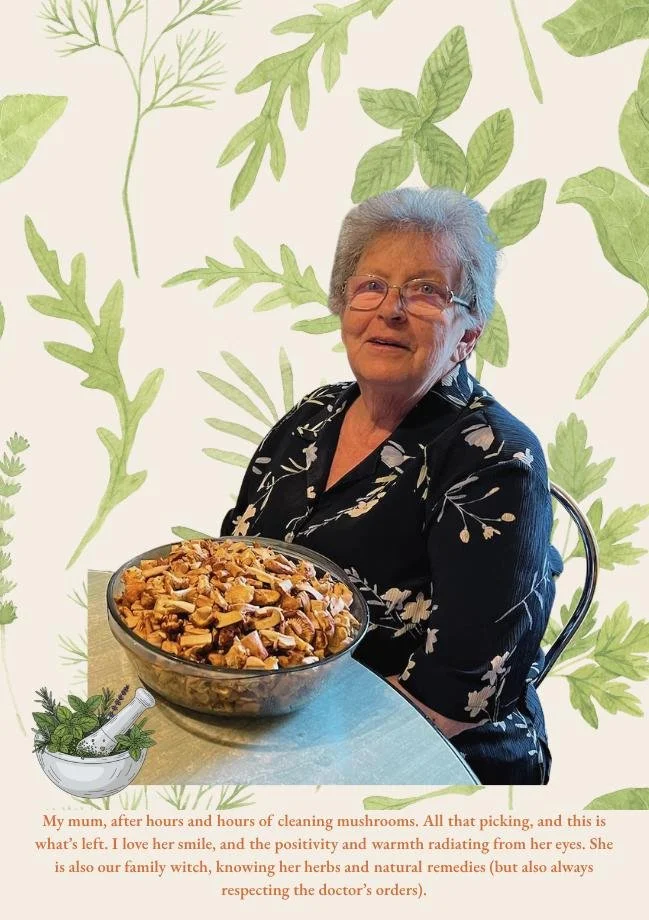
And there is a photograph of my mother, sitting behind a bowl of chanterelles she has just spent hours cleaning, looking exactly as pleased as you would expect.
Every body is different. Cook these, notice how you feel, and make them your own.
IMPORTANT NOTICE
The content shared by The Metabolic Kitchen Diaries is for general educational and informational purposes only. I am not a doctor, registered dietitian, or medical professional. Everything shared here is based on personal experience, self-experimentation, and publicly available nutritional research. Nothing on this platform constitutes medical advice, diagnosis, or treatment. Please consult your GP, oncologist, or a qualified healthcare professional before making significant changes to your diet, especially if you have a health condition, are undergoing treatment, or take regular medication. Every body is different. What works for one person may not work for another. The Metabolic Kitchen Diaries encourages individual experimentation, curiosity, and self-awareness, with professional guidance where appropriate.
@themetabolickitchendiaries · www.metabolic.kitchen