

Last week I stood at my kitchen counter with a jar of chia seeds in one hand and a bag of red lentils in the other, and it struck me that I'd been calling both of them "fibre" for years as if they were the same thing. They aren't. Stir a spoonful of chia into water and ten minutes later you have something close to frogspawn. It was the reason it took me so long to warm up to chia seeds. Rinse red lentils and the water simply runs cloudy. Same word on the label, completely different behaviour in the glass. And, as it turns out, completely different behaviour inside us.
We've been taught to think of fibre as one number on the back of a packet, something to tick off by the end of the day. Most of us in the UK don't eat nearly enough of it, so the advice usually stops at "eat more". That's fair, but it leaves out the most interesting part. Fibre is really a family of quite different compounds, and each member does a different job. Once you know who's who, you can start cooking for all of them.
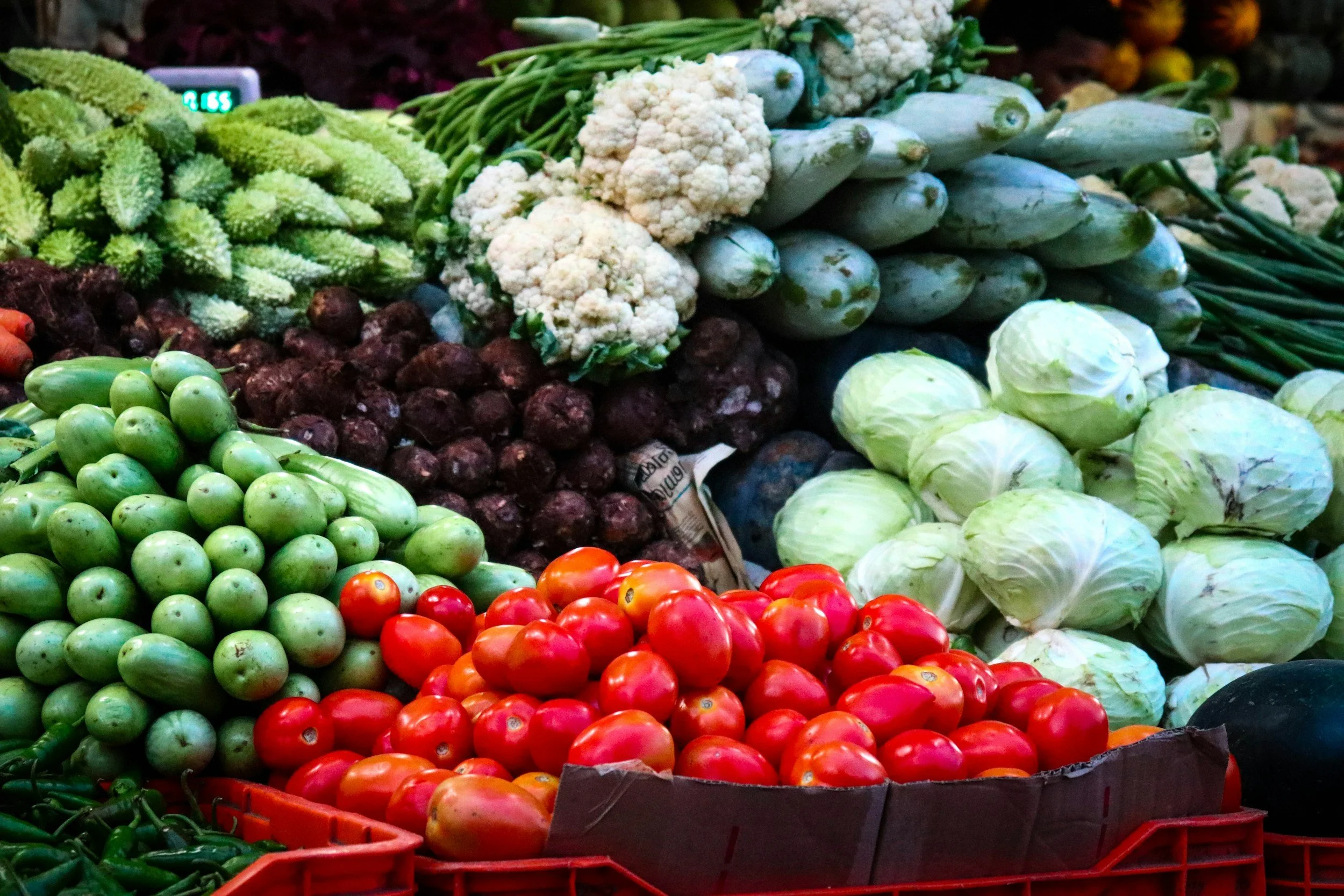
Yes, fibre is a carbohydrate. No, not that kind.
This is where a lot of confusion starts, so let's clear it up before anything else. Carbohydrates come in three broad types: sugars, starches and fibres. When most of us hear "carbs" we picture the first two. White toast, pasta, a jam doughnut, a bowl of cereal. Our own digestive enzymes break sugars and starches down into glucose fairly quickly, and that glucose heads into the bloodstream from the small intestine.
Fibre is the carbohydrate we can't break down ourselves. We simply don't have the enzymes for it. So it carries on, largely intact, into the large intestine, where the bacteria living there get their turn. That's why I like to think of fibre as the carbohydrate we eat on behalf of our gut bacteria.
You can see the difference in a single jacket potato. The fluffy white inside is mostly starch, the kind that becomes glucose. The crisp skin is where much of the fibre sits. Same potato, two very different carbohydrates. An apple works the same way: the sugars are in the juicy flesh, and the fibre is in the skin and in the soft, slightly sticky flesh around the core.
So whenever I say "carbs" in this post, I mean the fibrous kind – the skins, stalks, seeds, beans, lentils, leaves and whole grains – not the bread basket.
A label-reading tip. On UK and EU nutrition labels, fibre has its own line and isn't counted in the "carbohydrate" figure. So when you turn a packet over, the carbohydrate line is telling you about sugars and starches, and the fibre line sits separately underneath. Two packets can have a similar carbohydrate figure and a very different amount of fibre. Always worth a look at both, and at the ingredients list.
The starch that changes sides
There's one twist worth knowing. When some starchy foods are cooked and then cooled, part of their starch rearranges itself into a tighter structure that our enzymes struggle to get into. It's called resistant starch, and it behaves much more like fibre than like starch: it slips past the small intestine and feeds bacteria further down.
In one small study of 15 healthy adults in Indonesia, white rice that had been cooked, chilled in the fridge for 24 hours and then reheated contained more resistant starch and produced a gentler blood sugar rise than the same rice freshly cooked (Sonia et al., 2015). It's one small study, so I treat it as a nudge, not a rule.
In the kitchen, that nudge looks like this:
Cook potatoes (skin on) for a potato salad the day before and keep them in the fridge.
Make extra brown rice on Sunday for Monday's lunch.
Cooked and cooled lentils and beans in a salad.
A banana that's still a little green at the stalk end carries more resistant starch than a speckled, very ripe one.
Reheated al dente cooked pasta
One safety note on rice, because it matters: cool cooked rice quickly, get it into the fridge within an hour, and reheat it only once, until it's steaming hot all the way through.
Three questions to ask a fibre
You'll often see fibre split into "soluble" and "insoluble". It's a start, but researchers now describe fibres by three properties together: whether they dissolve in water, whether they thicken, and whether our gut bacteria can ferment them (Gill et al., 2021). In plain kitchen language:
Does it dissolve? Stir it into water. Does it disappear into the liquid, or does it stay as bits?
Does it thicken? Some dissolving fibres turn the water into a gel. Others dissolve and leave it runny.
Can your bacteria eat it, and how fast? This one you can't see in a glass, but it decides a great deal about what happens further down.
The properties don't line up as neatly as you'd hope. Resistant starch doesn't dissolve in water, yet gut bacteria ferment it eagerly. Some fibres that dissolve beautifully are barely fermented at all. So "soluble" doesn't automatically mean "feeds your bacteria", and "insoluble" doesn't mean "just roughage".
Most real foods also carry a mix. A pear has gel-forming pectin in its soft flesh and tougher, non-dissolving fibre in its skin and gritty bits. A spoonful of lentils covers almost the whole family. That's one reason whole foods do something a single isolated fibre can't.
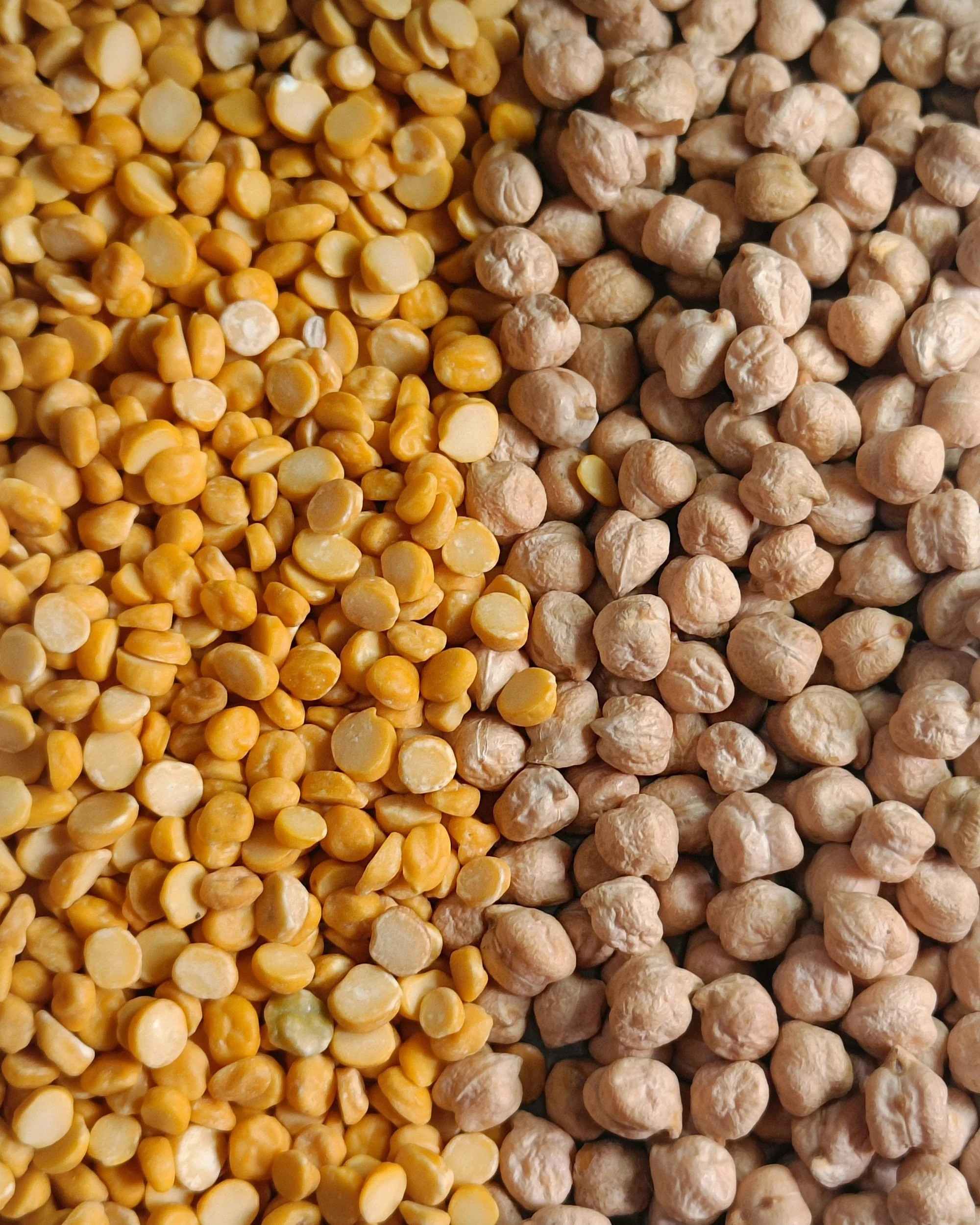
Try this at home. Put three glasses of cold water on the counter. Into the first, stir a tablespoon of chia seeds. Into the second, a tablespoon of porridge oats. Into the third, a tablespoon of wheat bran or finely chopped celery. Leave them for twenty minutes. The chia will set into a wobbly gel, the oats will turn the water cloudy and a little silky, and the bran or celery will sit there, swollen but separate.
You've just met three members of the fibre family. Kids love this one, by the way.
The bulkers: skins, stalks and husks
These are the fibres that don't dissolve. Think of the strings in a celery stick, the papery skin on a carrot, the husk around a wheat grain, the chewy stalk of a kale leaf. They hold on to water as they travel, adding softness and bulk, and that helps keep things moving through the gut at a comfortable pace. If you've ever felt sluggish after a few days of white bread and pasta on holiday, you've felt their absence.
The easiest wins here are about what you don't throw away:
Scrub, don't peel. Carrots, parsnips, courgettes, cucumbers, new potatoes and apples all keep a good share of their fibre in or just under the skin. A firm scrub under the tap is enough.
Use the stalks. Broccoli stalks, sliced thin, cook in the same time as the florets. Kale and chard stems can go into the pan a few minutes before the leaves.
Swap white for whole. Wholegrain bread instead of white, brown rice instead of white, wholewheat pasta now and then. Same meal, more bulkers.
Grate it raw. My grated carrot, red and white cabbage salad, with nothing more than lemon juice, olive oil, salt and pepper, is a bowl of bulkers. I make a big batch and it keeps in the fridge for a couple of days.
Add a crunch. A handful of chopped nuts or seeds on a salad or a stew brings bulkers along with protein and fat. My garlic mushrooms with kale and peanuts does exactly that in one pan.
One practical thing. Bulkers work with water, so if you're adding more of them, drink a little more too, and build up over a week or two rather than overnight.
The thickeners: the gel-makers
This is the chia glass. Some fibres soak up water and turn into a thick, slippery gel. You already know them by feel: the creaminess of a pot of porridge, the way a lentil soup thickens as it stands, the slipperiness of okra, the set of a homemade apple purée. That gel is doing real work.
It slows the arrival of sugar. A thick gel makes everything in the gut move more slowly, so the sugars and starches from the rest of the meal reach the bloodstream more gradually. Back in 1978, a small group of volunteers drank a glucose drink with different fibres added. The thicker the fibre, the flatter their blood sugar rise. When the researchers used a version of the same fibre broken down so it no longer thickened, most of the effect disappeared (Jenkins et al., 1978). It was a lab-style test with sugary water rather than a meal, but the principle has held up for decades: thickness matters.
It helps with cholesterol. The gel traps some of the bile acids your liver releases to digest fat. Your liver then draws on cholesterol to make fresh bile. Oats are the best-studied example: a review of 28 trials found that eating oat beta-glucan (the gel-forming fibre in oats) every day brought LDL cholesterol down modestly but consistently (Whitehead et al., 2014). Most of those trials lasted no more than 12 weeks, and the review was funded by an ingredient company, which is worth knowing.
Here's how I bring the thickeners into an ordinary week:
Start with them. If a meal includes bread, rice or potatoes, I try to eat the beans, lentils or vegetables first. A bowl of lentil soup before the main course is an old trick for a reason.
Put them in the same pot as the starch. Beans stirred into a rice dish, chickpeas in a stew served with a little bulgur, borlotti beans in a chicken casserole. My oven-braised chicken with borlotti beans, tomatoes, mushrooms and kale is built exactly like this.
Choose proper oats. Jumbo or steel-cut oats keep more of their structure than instant sachets. I make them with milk, and top them with Greek yoghurt and a handful of nuts, so protein and fat come along too.
Stir in seeds. A spoonful of chia or ground flaxseed in yoghurt, overnight oats or a smoothie. Give chia ten minutes to swell before you eat it.
Make friends with okra. The "slime" people complain about is gel-forming fibre. Cooked quickly on high heat with garlic and olive oil, alongside broccoli and fine asparagus, it's one of my favourite sides.
Eat the whole fruit. An apple or a pear with its skin brings pectin with it. Apple juice leaves almost all of that behind.
The feeders: dinner for your gut bacteria
Now we reach the large intestine, home to trillions of bacteria. Fermentable fibres are their food. As they ferment it, they make substances called short-chain fatty acids. One of them, butyrate, is the main fuel for the cells lining your colon. Others travel further and take part in how your body handles energy and appetite.
The interesting part is that feeders don't all ferment at the same speed, and that changes where in the gut the work happens.
The fast feeders (rapidly fermented fibres) get eaten almost as soon as they arrive in the first stretch of the large intestine. This produces plenty of short-chain fatty acids, and also plenty of gas. The onion family is full of them: onions, garlic, leeks, spring onions, as well as asparagus, chicory and Jerusalem artichokes. If a big bowl of leek and potato soup has ever left you a little bloated, that was the fast feeders at work.
The resistant starches take their time. Resistant starch and the tougher fibres in whole grains, beans and nuts tend to survive further along the colon before they're broken down. The lower part of the gut is lined with cells that release fullness messengers when they sense short-chain fatty acids. In one study, researchers delivered a short-chain fatty acid straight to the colon using a specially made compound. Volunteers released more of two of these fullness messengers and ate less at a buffet meal afterwards (Chambers et al., 2015). That was a purpose-built ingredient, not an ordinary meal, but it shows the gut has its own built-in "I've had enough" signal, and fibre fermentation can switch it on.
Different bacteria want different fibres. In a well-known experiment, volunteers ate either an all-plant or an all-animal diet for a few days. On the all-animal diet, the bacteria that specialise in breaking down plant fibres dropped within days, and the community shifted back to normal about two days after people returned to their usual food (David et al., 2014). It works rather like a household: a visitor can rearrange the kitchen for a weekend, but once they've gone home, the old routine returns. What your bacteria get most weeks is what shapes them, not one heroic week followed by the old routine.
Feeding the feeders, in practice:
Go gently with beans if you're new to them. A few spoonfuls in a stew or a soup this week, a bit more next week. Rinse tinned beans well. Red lentils tend to be the gentlest place to start. For many people the bloating settles as their bacteria adjust.
Cook once, eat twice. Leftover cooked potatoes, rice, lentils and beans, cooled in the fridge, bring the slow-fermenting resistant starch with them.
Mix your grains and seeds. Barley in a soup, buckwheat or brown rice under a stew, pumpkin and sunflower seeds over a salad. Each feeds a slightly different crowd.
If you live with IBS or another gut condition, the fast feeders in particular can be uncomfortable. Please talk to your GP or gut specialist before making big changes.
Why variety beats a number
Put all of this together and the case for chasing a single daily fibre figure starts to look thin. You could reach a respectable total from one breakfast cereal and still be feeding only a narrow slice of your gut bacteria, with no gel-makers and very few slow feeders. A single fibre stirred into a glass of water has the same problem. It's one member of the family turning up to a big dinner.
Variety is what covers the whole family. In the American Gut Project, a large citizen-science study, people who ate a wider range of plant foods each week had more diverse gut bacteria than people who ate only a handful (McDonald et al., 2018). It's worth being honest about the limits: the volunteers chose to take part and reported their own diets, and the researchers themselves said they don't yet know whether raising diversity directly improves health. I read it as a direction to walk in, not a score to hit.
And the reassuring part: when your plate is genuinely varied, the total tends to take care of itself. You don't have to count anything.
What counts as variety is broader than most people think. Herbs and spices count. So do nuts, seeds, beans, lentils, whole grains, mushrooms, and every colour of fruit and vegetable. Red cabbage and white cabbage are different plants on your plate. So are green and red lentils. Here's a little test I use: when I'm putting the shopping list together, I look for at least one plant I haven't bought in a while. This week it was celeriac.
The fibre family in your kitchen
Pop this on the fridge. Most foods belong to more than one family, so treat the columns as a guide, not boxes.
The bulkers (mostly insoluble)
Add bulk to stools and help keep your bowels moving.
Find them in: Vegetable and fruit skins, celery, cabbage, kale stalks, wheat bran, wholegrain bread, nuts.
In the kitchen: Scrub instead of peel; slice broccoli stalks into the pan; make a grated cabbage and carrot salad.
The thickeners (gel-forming)
Form a gel that can slow sugar absorption and help lower LDL cholesterol.
Find them in: Oats, barley, chia, ground flaxseed, okra, beans, lentils, apples, pears and citrus fruits.
In the kitchen: Lentil soup before the main; jumbo oats with yoghurt and nuts; chia stirred into yoghurt.
The fast feeders (readily fermented)
Feed gut bacteria, often early in the colon, producing short-chain fatty acids and gas.
Find them in: Onions, garlic, leeks, spring onions, asparagus, chicory root and Jerusalem artichokes.
In the kitchen: Use onions, garlic or leeks as a base for savoury dishes; roast asparagus as a side. Start small if these foods make you bloated.
The resistant starches (escape digestion)
Pass through the small intestine largely undigested and reach the colon, where gut bacteria can ferment them.
Find them in: Cooked-and-cooled potatoes, rice and pasta; slightly green bananas; beans and lentils.
In the kitchen: Cook extra for tomorrow's lunch; make potato salad the night before; chill leftover pasta for a next-day meal. Cool and refrigerate cooked food promptly.
The all-rounders (a mix of fibres)
Bring several fibre types together, helping with bowel regularity and feeding gut bacteria.
Find them in: Beans, lentils, chickpeas, peas, nuts and seeds.
In the kitchen: Add a spoonful of beans to a stew; enjoy a handful of nuts with olives as a snack.
Add, don't overhaul
You don't need a new way of eating to feed the whole family. Adding to meals you already cook works better, and it lasts. Here's what an ordinary day in my kitchen can look like, with the fibre family members in brackets.
Breakfast. Scrambled eggs with a spoonful of the chilli shiitake I batch-cook at the weekend (mushrooms bring their own fibres), and a few cherry tomatoes on the side (bulkers). On other days it's Greek yoghurt with my low-GI granola, which is almost nothing but nuts and seeds, chia included (bulkers, thickeners, all-rounders).
Lunch. Lemony red lentil and chicken soup (thickeners, all-rounders, and the onion and garlic it starts with are fast feeders). A bowl of the grated carrot and cabbage salad alongside if there's some in the fridge.
A snack, if I need one. Almonds mixed with olives and a pinch of dried rosemary. It takes thirty seconds to put together.
Dinner. The oven-braised chicken with borlotti beans, tomatoes, mushrooms and kale. One pot, and nearly every member of the family is in it: onion and garlic, beans, kale stalks, tomato skins. Whatever's left becomes tomorrow's lunch.
Notice what's not here: no fibre counting, no special products, no foods off-limits. Just more different plants, a lot of them hiding inside dishes that would be on the table anyway.
If you'd like a gentle structure for building these habits, our free 28-day guide, One Plate at a Time, adds one meal and one principle a week. And if you'd rather have the planning done for you, the Kitchen Reset meal plan puts the whole fibre family on your plate for a week, with the recipes and shopping list included. Both are at metabolic.kitchen.
I'd love to hear what you add this week. Tell me over on Instagram at @themetabolickitchendiaries.
References
Chambers ES, Viardot A, Psichas A, et al. Effects of targeted delivery of propionate to the human colon on appetite regulation, body weight maintenance and adiposity in overweight adults. Gut. 2015;64(11):1744–1754. Link – overweight adults; a purpose-made inulin-propionate compound, not ordinary food.
David LA, Maurice CF, Carmody RN, et al. Diet rapidly and reproducibly alters the human gut microbiome. Nature. 2014;505(7484):559–563. PubMed – small group; deliberately extreme all-plant and all-animal diets over a few days.
Gill SK, Rossi M, Bajka B, Whelan K. Dietary fibre in gastrointestinal health and disease. Nature Reviews Gastroenterology & Hepatology. 2021;18(2):101–116. DOI – review article.
Jenkins DJ, Wolever TM, Leeds AR, et al. Dietary fibres, fibre analogues, and glucose tolerance: importance of viscosity. BMJ. 1978;1(6124):1392–1394. PMC – groups of four to six volunteers; glucose drink rather than a meal.
McDonald D, Hyde E, Debelius JW, et al. American Gut: an open platform for citizen science microbiome research. mSystems. 2018;3(3):e00031-18. DOI – self-selected volunteers, self-reported diets, mainly US and UK.
Sonia S, Witjaksono F, Ridwan R. Effect of cooling of cooked white rice on resistant starch content and glycemic response. Asia Pacific Journal of Clinical Nutrition. 2015;24(4):620–625. PubMed – 15 healthy adults in Indonesia.
Whitehead A, Beck EJ, Tosh S, Wolever TM. Cholesterol-lowering effects of oat β-glucan: a meta-analysis of randomized controlled trials. American Journal of Clinical Nutrition. 2014;100(6):1413–1421. PubMed – 28 trials, mostly 12 weeks or less; industry-funded.
IMPORTANT NOTICE
The content shared by The Metabolic Kitchen Diaries is for general educational and informational purposes only. Everything shared here is based on personal experience, self-experimentation, and publicly available nutritional research. Nothing on this platform constitutes medical advice, diagnosis, or treatment. Please consult your GP, oncologist, or a qualified healthcare professional before making significant changes to your diet, especially if you have a health condition, are undergoing treatment, or take regular medication. Every body is different. What works for one person may not work for another. The Metabolic Kitchen Diaries encourages individual experimentation, curiosity, and self-awareness, with professional guidance where appropriate.
All rights reserved.