A food-first guide for the months on medication, and the years after. Weight-loss medication has gone from something you read about in the papers to something your neighbour, your colleague or your sister might be taking. Most of what gets written about it is about the medicine itself: who it’s for, how much weight people lose, what it costs. Far less is written about the plate. The plate is where I can help.
Let me be clear about what this post is, and what it isn’t. I don’t advise on medication: not whether to start, which one, what dose, or when to stop. Those decisions belong with your doctor or prescriber.
This post is about food. How to get your kitchen ready before you begin, how to eat well while your appetite is quiet, and how to keep your footing when it comes back.
What the medication changes, and what it doesn’t
GLP-1 medicines copy a hormone your gut already releases after you eat. They slow down how quickly your stomach empties and turn down the volume on hunger. A lot of people describe it as the “food noise” going quiet. That is the part that helps with weight. It is also why the most common side effects are about the stomach: feeling sick, feeling full after a few mouthfuls, heartburn, constipation.
What the medicine doesn’t do is choose your food. When you’re eating much less, each plate has a bigger job. Eat less of everything and you also get less protein, less fibre and fewer vitamins and minerals. In 2025, four major medical and nutrition organisations in the US published a joint advisory on exactly this. Their list of concerns reads almost like a list of things a well-built plate can help with: stomach side effects, nutrient gaps, loss of muscle and bone, and weight returning once treatment ends.
Part one: before you start
If you’re still talking it through with your doctor, you have one real advantage, and that’s time. A few weeks of preparation now makes the first months far easier.
Get to know how you eat now
For one ordinary week, notice. Which meals keep you full until the next one? When does hunger turn up in the afternoon, and what do you reach for? Which lunches leave you flat by three o’clock? A notebook is fine, or the notes app on your phone. Later, when the medication is no longer quietening your appetite, this becomes your map.
Find your small plates
On medication, many people find a full dinner plate is simply too much. Think now about smaller meals you genuinely like that still carry protein, healthy fat and fibre. A few from my own kitchen:
• two eggs scrambled with a handful of spinach, on half a slice of sourdough
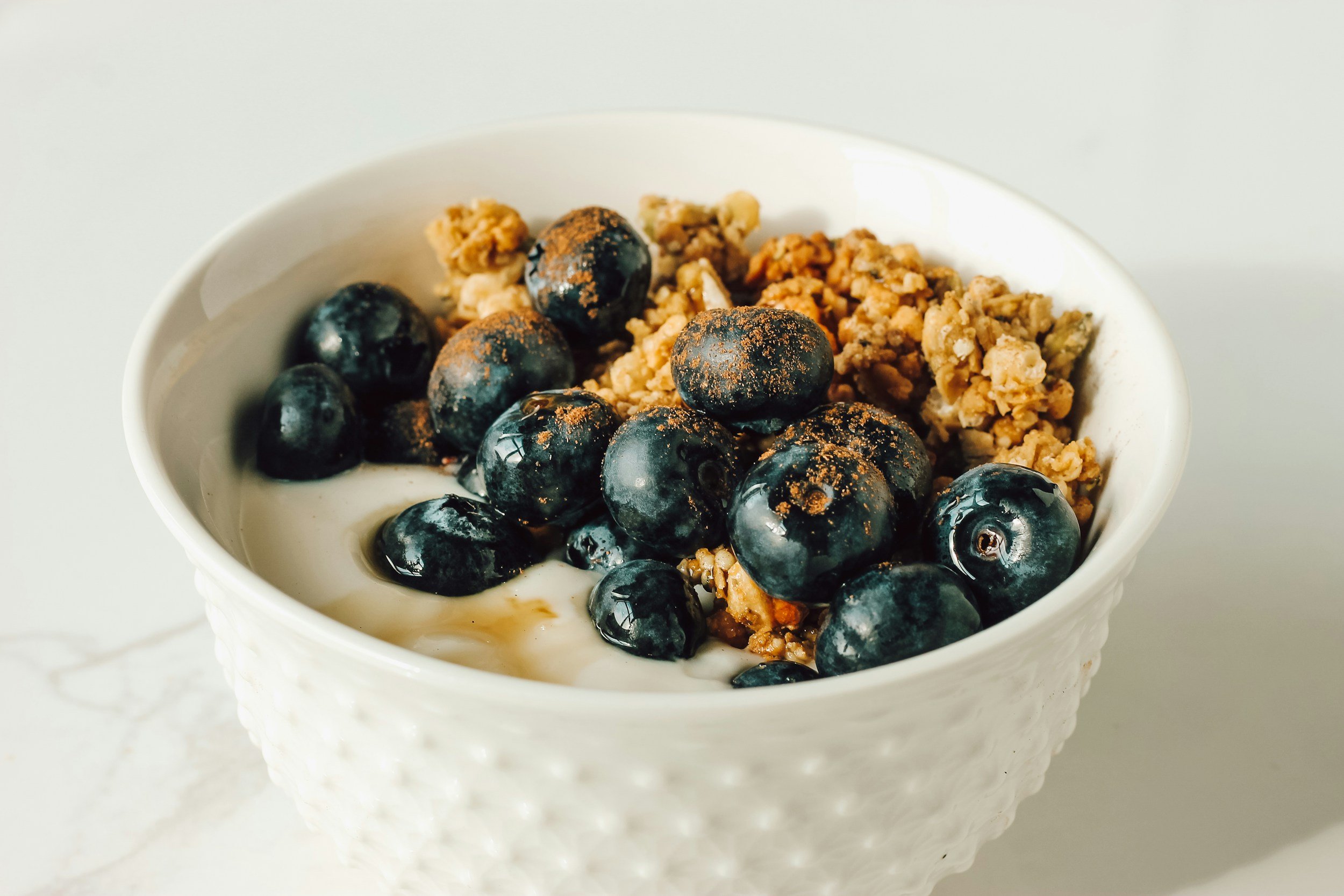
• plain Greek yoghurt with berries and a spoon of ground flaxseed
• a bowl of chicken and vegetable soup, blended smooth if chunks feel like hard work
• cottage cheese with cucumber and a couple of oatcakes
• a small piece of salmon with green beans and a drizzle of olive oil
Write down ten of your own. On a queasy Tuesday you won’t want to think. You’ll want a list.
Stock the kitchen for low-appetite days
Eggs. Plain Greek yoghurt and cottage cheese. Tinned salmon, sardines and mackerel. Ready-cooked lentils and chickpeas in tins or pouches. Frozen vegetables and frozen berries. Nuts, seeds and ground flaxseed. A batch of soup in the freezer, portioned small. And a box of peppermint or ginger tea, which the NHS team at Guy’s and St Thomas’ suggest for days when you feel sick.
Start the strength habit before you need it
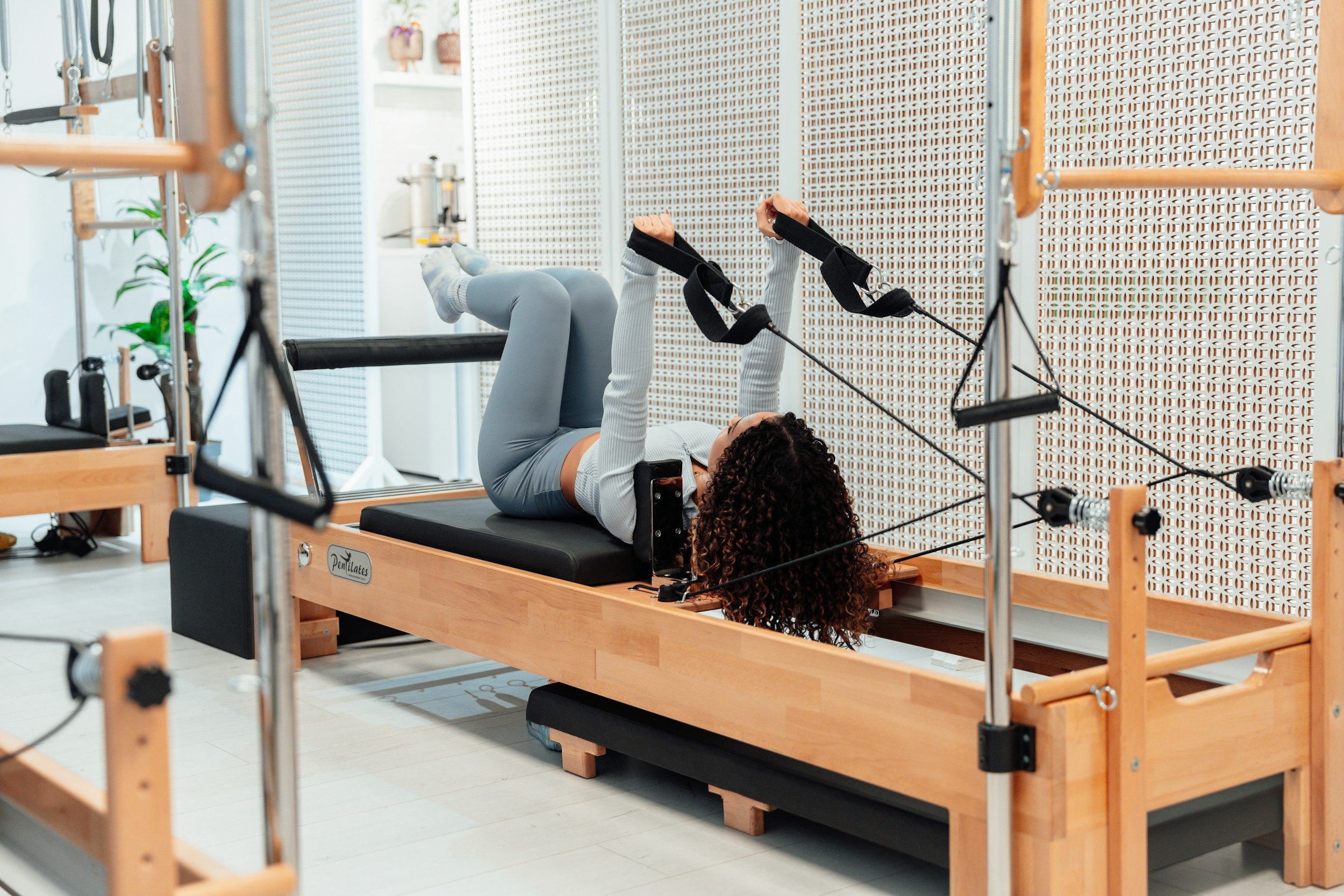
I’ll come back to muscle in a moment, because it matters more than most people expect. For now: it is much easier to keep a habit going than to start one when you’re tired and eating less. Resistance bands, bodyweight exercises at home, Pilates, a class at the gym. Two or three short sessions a week is a good place to begin, and building up slowly counts.
Ask about a starting point
It’s worth asking your GP or prescriber whether any checks make sense before you begin. The joint advisory recommends that care starts by looking at a person’s usual eating, activity and muscle strength, so there’s something to compare against later.
Part two: while you’re on it
The first weeks, and the weeks after any dose increase, are usually when the stomach side effects are strongest. The Guy’s and St Thomas’ team note that these usually settle within three to four weeks. Food can make that stretch gentler, and the habits you build in it can last far longer than the prescription.
Protein first
With a smaller appetite, the order you eat in matters for a new reason. Start with the protein: the egg, the fish, the chicken, the lentils. If you fill up halfway through, the part you’ve already eaten is the part your muscles need most. A palm-sized portion at each meal is a good rough guide. It also happens to be the same “vegetables and protein before the starch” habit we use at MKD for steadier energy.
Why all the fuss about muscle?
When we lose weight, we lose some muscle along with the fat. That happens on medication and on a diet alike. A 2026 analysis of trials found the share of weight lost as lean mass was broadly similar either way, and lowest when resistance training was part of the plan.
Muscle is what keeps you strong and steady on your feet as the years go by. It is also where most of the sugar from a meal goes once it’s in your bloodstream. Look after it with protein on the plate and something to push against a few times a week.
Little and often, but don’t skip
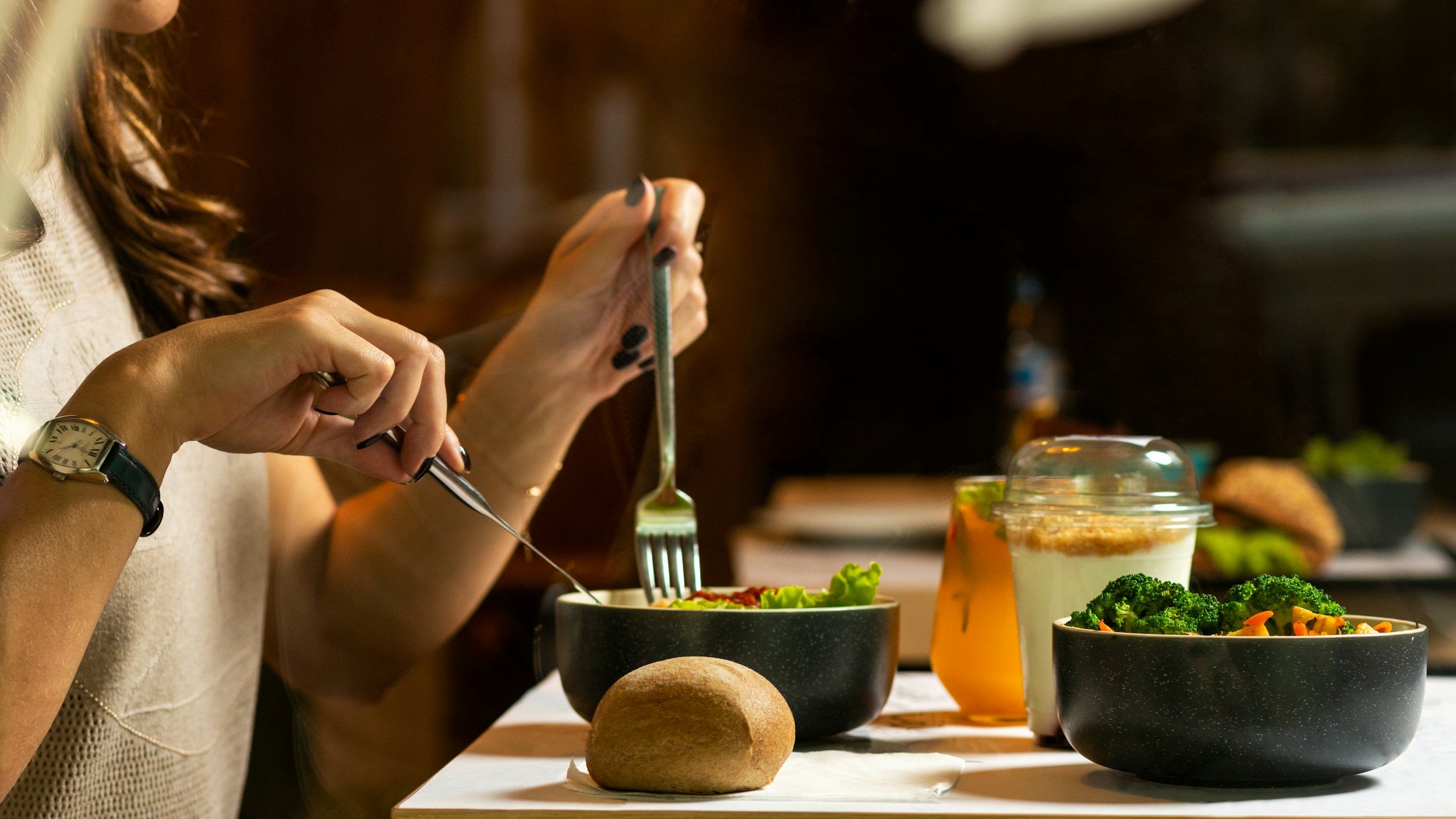
Smaller meals, more often, tend to sit better than three big ones. Eat slowly. Put your fork down between mouthfuls. Stop at the first sign of fullness, not when the plate is clean, because on these medicines “full” can arrive suddenly and then tip into queasy. If a whole meal feels like too much, eat half now and the rest in a couple of hours. What’s worth avoiding is the slow drift into living on crackers and coffee because nothing else appeals.
Go gently with very rich food
Large, greasy meals are a common trigger for nausea and heartburn on these medicines. The NHS advice is to go easy on fatty food when you feel sick and not to lie down soon after eating. Strong cooking smells can be a problem too, so cold food sometimes goes down better than hot. This doesn’t mean giving up the good fats. A drizzle of olive oil, a few slices of avocado or a small handful of nuts still belong on the plate. It’s the deep-fried takeaway and the plate swimming in cream sauce that are more likely to come back to bite.
Fibre, slowly, with water
Constipation is one of the most common complaints, and fibre helps. But if you go from very little to a lot overnight, your gut will let you know about it. Add it a bit at a time: a spoon of ground flaxseed or chia stirred into yoghurt, a handful of lentils in the soup, a kiwi or two, a few prunes. And drink, because fibre without enough water can make things worse rather than better. Sip through the day, ideally between meals rather than a big glass with them, so the food has room.
Keep the colour on the plate
Eating less means fewer vitamins and minerals coming in, so variety does more work than usual. Leafy greens, oily fish, beans, berries, nuts and seeds, a little wholegrain. Rotate them across the week rather than trying to fit everything onto one small plate. If you’re worried you’re not getting enough, or you’re wondering about a supplement, that’s a good question for your GP or pharmacist.
Use the quiet
This is the part I most want you to take away. While hunger is quiet, you have a rare chance to practise new habits without wrestling cravings at the same time. Researchers at the University of Oxford think this may be part of why weight tends to come back faster after medication than after a diet-and-exercise programme. On medication, the weight can come off without you having to consciously practise changing how you eat. So practise anyway.
Learn three or four dinners you’d happily eat for years. Get used to a short walk after your evening meal. Eat at the table rather than in front of a screen. Notice what “comfortably full” feels like, and how you feel two hours after different meals. None of this is dramatic. All of it will still be there when the medication isn’t.
When food isn’t the answer
If you are being sick repeatedly, can’t keep fluids down, have dark urine or feel lightheaded, contact your prescriber or GP. That is the NHS advice, and it isn’t something to manage in the kitchen.
Part three: coming off
Whether and when to stop is a decision for you and your prescriber. What I can help with is what happens on the plate afterwards, and it helps to go in with your eyes open.
What the research says
In January 2026, a team at Oxford published a large review in The BMJ, pulling together 37 studies of people who had stopped weight-management medication. On average, weight crept back steadily after stopping and was projected to return to its starting point in under two years. Improvements in blood pressure, cholesterol and blood sugar tended to fade along with it. Weight also came back faster than it does after people finish a diet-and-exercise programme, whatever the amount they had lost.
Two honest caveats. Only eight of those studies looked at the newer medicines, and none followed people for more than a year after stopping. And the researchers were clear that this isn’t a failing of the medicines. It reflects how stubborn weight regulation is for many of us.
In the UK, NICE now says people coming off weight-management medication should be offered advice and support for at least a year afterwards. I don’t share any of this to frighten anyone. I share it because a plan made calmly in advance is far easier to follow than one invented when you’re hungry at nine o’clock at night.
Make your plan before the last dose
Sit down with your notes from part one and the habits you built in part two, and sketch out an ordinary week. The breakfasts you’ll rotate. The lunches you’ll take to work. Three or four dinners on repeat. The snacks you’ll keep in the cupboard for the times you already know hunger arrives.
Expect hunger, and don’t panic when it comes
Your appetite coming back is your body working normally. It isn’t a sign that you’re failing. After months of quiet it can feel loud, so have an answer ready for it: something with protein and fibre that you actually enjoy. An apple with a spoon of nut butter. A pot of Greek yoghurt with seeds. A boiled egg and some cherry tomatoes. A mug of soup. It’s much easier to reach for these if they’re already in the fridge.
Keep the anchors
These are the same principles we use at MKD for everyone, with or without medication:
• Protein, healthy fat and fibre on every plate — the PFF pairing that keeps you satisfied for longer.
• Vegetables and protein first, starch last — a simple way to eat in order.
• A short walk after eating — even a few minutes helps, and it’s a lovely habit to keep.
• Strength work, kept going — your muscle needs it more than ever now.
• Portions by hand, not by scales — no counting, no weighing, no forbidden foods.
Watch your signals, gently
Energy through the afternoon. How long a meal keeps you full. Sleep, mood, cravings, how your clothes fit. These tell you a great deal, and they tell you sooner than most things. If stepping on the scales now and then helps you, do it, but treat any change as information rather than a verdict. If things start drifting, go back to your notes, and ask your GP what support is available. You’re entitled to ask.
Where to go next
If you’d like the fuller picture of how we eat at MKD, with PFF, eating in order, timing, 35 snacks and ten recipes, start with my free guide, Metabolically Balanced Eating: what it is, and how to take your first steps.
If you’d rather build slowly, which suits the “use the quiet” months very well, One Plate at a Time is our free 28-day plan. Each week adds one meal and one small habit, starting with breakfast, so by day 28 you’ve put a whole day of eating together yourself.
And if you’d like help putting this into practice for your own life, that’s what my GLP-1 Nutrition Compass session is for. Whether you haven’t started yet, you’re partway through or you’re nearing the end, we spend 50 minutes together by video or phone, after a short questionnaire about your routine and your household. I listen first, we choose a few practical priorities, and then I turn them into food you can actually make. It’s food and nutrition only, never advice on the medication itself. (If you wear a glucose monitor, there’s a CGM Compass too.)
With love from my kitchen to yours,
Agnes

Sources
1. Mozaffarian D, et al. Nutritional priorities to support GLP-1 therapy for obesity: a joint Advisory from the American College of Lifestyle Medicine, the American Society for Nutrition, the Obesity Medicine Association, and The Obesity Society. American Journal of Clinical Nutrition 2025;122:344–367. doi:10.1016/j.ajcnut.2025.04.023
2. West S, Scragg J, Aveyard P, et al. Weight regain after cessation of medication for weight management: systematic review and meta-analysis. BMJ 2026;392:e085304. doi:10.1136/bmj-2025-085304
3. Lean mass changes with incretin therapy versus lifestyle intervention: a systematic review and meta-analysis of randomised controlled trials. Diabetes, Obesity and Metabolism 2026;28(6):4818–4827. doi:10.1111/dom.70666
4. NICE. Overweight and obesity management (QS212), quality statement 7: advice and support after stopping medicines for weight management. August 2025.
5. Guy’s and St Thomas’ NHS Foundation Trust. Lifestyle advice for people taking weight loss medicines: managing side effects with diet.
Disclaimer
The content shared by The Metabolic Kitchen Diaries is for general educational and informational purposes only. Nothing on this platform constitutes medical advice, diagnosis, or treatment. This post offers food and nutrition education only and does not include any advice about medication, including starting, changing the dose of, or stopping it. Please consult your GP, oncologist, or a qualified healthcare professional before making significant changes to your diet, especially if you have a health condition, are undergoing treatment, or take regular medication. Every body is different. What works for one person may not work for another. The Metabolic Kitchen Diaries encourages individual experimentation, curiosity, and self-awareness — with professional guidance where appropriate.