

For a while, my breakfast was porridge, eggs, avocado, a piece of steak and a pot of yoghurt, tomatoes, cucumber, and, and. Not a choice between them. All of them, on most mornings. I was anxious to have all nutrients I need at all meal times.
My breast cancer journey began in 2018. It was the second diagnosis, a few years later, that made me look properly at what I was eating. Once the first wave of appointments had settled and I had a little headspace, I threw myself at nutrition the way I have thrown myself at most things in life: thoroughly, and with lists.
Every day felt like a day in the fight, and I wanted each one to count. If a nutrient might help my body through treatment, I wanted it in me. Broccoli, because I had read about what the cabbage family does. Peppers and oranges for vitamin C. Oily fish for vitamin D. Nuts for selenium and vitamin E. Yoghurt for my gut. All of it from real, whole food, nothing out of a factory, and preferably all of it today.
So the porridge got its seeds, the eggs got their avocado, the steak was there for iron, and the yoghurt went on the side because calcium mattered too. Lunch and dinner went the same way.
Every plate became a small insurance policy, and I kept topping up the cover.
Each of those foods, on its own, was a good choice. Together they were a great deal of food. What I didn't notice for a long time was that the plates kept getting bigger, and slowly, so did I. There was a lot going on in my body then, and I won't pretend food was the only factor. But I am fairly sure those generous, well-meaning plates played their part in the weight I gained.
I'm still in treatment today, and I'm doing well. What changed along the way was a single question I learned to ask, and it's the reason for this post.
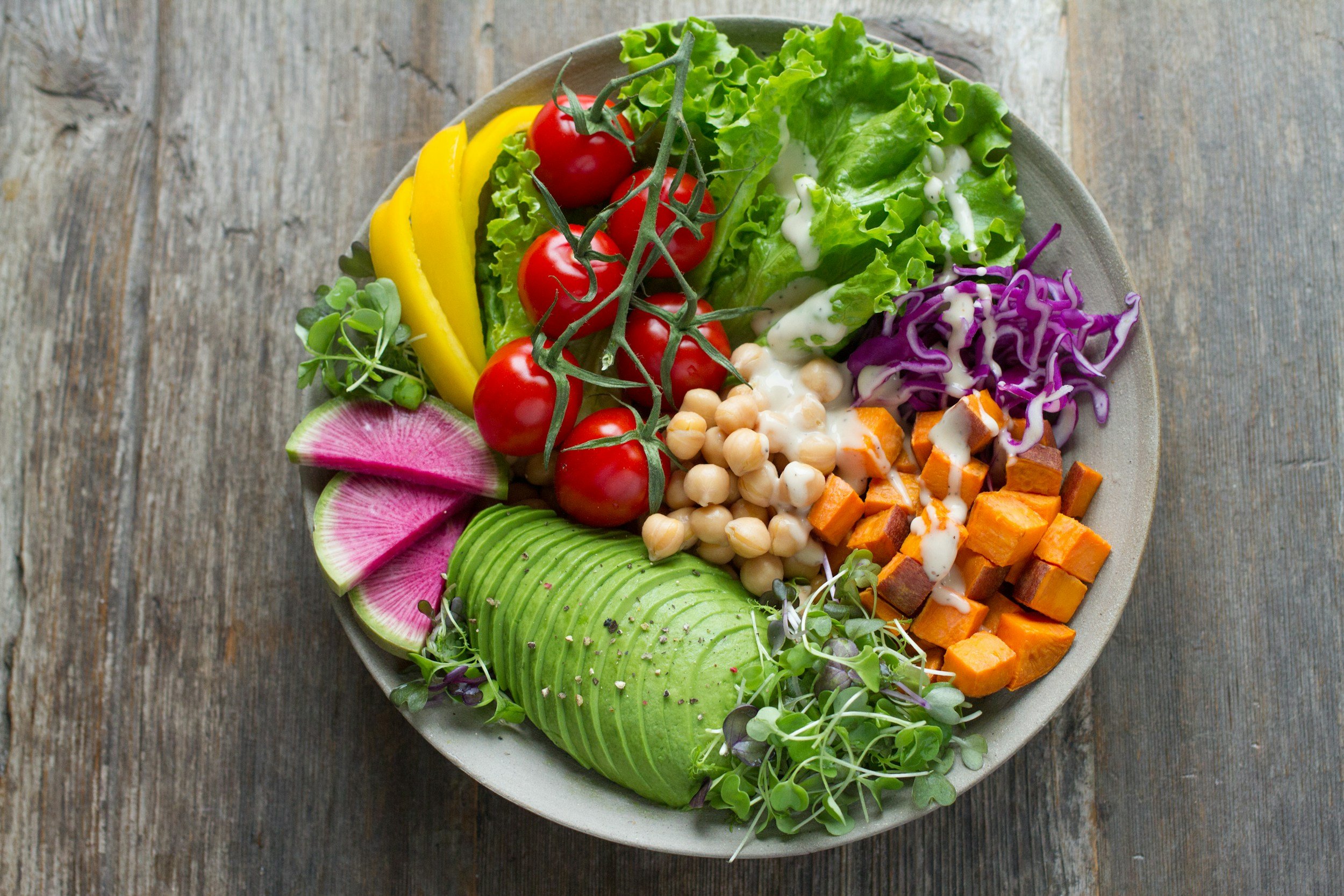
The question that changed my plate
I stopped asking "what does this plate need?" and started asking "what does my week need?"
It sounds like a small shift. In my kitchen it was enormous, and the reasons behind it are reassuring. It was at the same time I truly learned and lived, how nutrition could support my workout.
Your body keeps a pantry. Some vitamins are stored. Vitamins A, D, E and K live in your fat tissue and liver, and B12 is held in the liver for a long time. You don't need them on every plate, or even every day. Others, like vitamin C and most of the B vitamins, aren't stored in any real quantity, so a regular top-up helps. But a regular top-up can be a handful of sliced pepper at lunch. It doesn't have to be an orange at every meal.
Your gut likes variety over the week, not volume in one sitting. The American Gut Project, a large citizen-science study, found that people who ate more than 30 different plant foods a week had a more varied community of gut bacteria than people who ate 10 or fewer. It was observational and relied on volunteers reporting their own diets, so it shows a link rather than proving cause. Still, the lesson for the kitchen is clear enough: thirty different plants spread across seven days is easy and pleasant. Thirty crammed onto one breakfast is not.
And a big plate gets eaten. This one stung a little. In studies at Penn State, Barbara Rolls and her team served adults larger portions of everything for days at a time. People simply ate more, meal after meal, and their bodies didn't quietly make up for it the next day. In the longest of those studies the extra eating carried on for all eleven days. None of us is immune, least of all a woman on a mission to stay alive for longer.
Put those three together and the overloaded plate stops making sense. Nutrition works across a week. Portions work at the meal.
What my plate looks like now
These days breakfast is one of those things, done well, rather than all of them at once. Eggs with half an avocado and a handful of wilted spinach. Or Greek yoghurt with berries, a few walnuts and a spoon of ground flaxseed. Or a smaller bowl of porridge made with milk or water, a spoon of nut butter stirred through, seeds on top. The steak moved to dinner, where it always belonged.
I don't weigh anything and I don't count anything:
Half the plate is vegetables, mostly the non-starchy kind: greens, the cabbage family, peppers, courgettes, mushrooms, tomatoes.
A palm-sized portion of protein: fish, chicken, eggs, meat, beans or lentils, Greek yoghurt.
A cupped handful of slower carbohydrates, or less if I'm not moving much that day: oats, rye, barley, brown rice, a few new potatoes in their skins, or the beans doing double duty.
A thumb or two of fat: a pour of extra virgin olive oil, a few slices of avocado, a sprinkle of seeds or a little cheese.
Fruit: not as much as before, timed strategically right after a bigger meal and/or right before working out or going on a walk, so as to maintain a steady blood sugar level.
That's the MKD balance of protein, fat and fibre on every plate, and it keeps me full for hours. I also eat in an order that helps keep my blood sugar steadier: vegetables and protein first, the starchy part last. A small study in people with type 2 diabetes found that eating the vegetables and protein before the carbohydrate led to noticeably lower glucose after the meal than the other way round. It was a handful of people, so I treat it as a gentle nudge to experiment rather than a rule. When I can, a short walk after eating finishes the job.
Once my plates came back into proportion, alongside plenty of movement (dog walks, mat and reformer Pilates, weights, the odd swim), the weight began to come off, slowly and without a battle. Every body is different, and I can only tell you what happened in mine. But I eat every single nutrient I used to chase. I just don't eat them all before nine in the morning.
Your week at a glance
Here's the whole week on one page. Nothing is processed beyond what your own kitchen would do to it: real food, cooked simply. You won't hit every line every week, and you don't need to. Aim for the pattern.
Every day
Vegetables at lunch and dinner, half the plate, including leafy greens or the cabbage family (broccoli, kale, cabbage, sprouts): fibre, folate, vitamin K, potassium, vitamin C
Something colourful and fresh: peppers, tomatoes, berries, citrus, kiwi, carrots, beetroot: vitamin C, vitamin A, polyphenols
Protein at each meal
Extra virgin olive oil as your everyday fat, or avocado; garlic, onions, herbs and spices as freely as you like: healthy fats and vitamin E; fat also helps you absorb vitamins A, D, E and K
Most days
Beans, lentils or chickpeas: fibre, plant protein, folate, iron, magnesium
A small handful of nuts or seeds: walnuts, almonds, pumpkin, flax, chia: vitamin E, magnesium, zinc, plant omega-3
Greek yoghurt, kefir or milk; cheese in small amounts, for flavour: calcium, iodine, B12, protein; live cultures in yoghurt and kefir
Wholegrains in modest portions: oats, rye, barley, buckwheat, brown rice: fibre, B vitamins, magnesium
Eggs: protein, B12, vitamin D, choline, selenium
A few times a week
Chicken or turkey: protein, B vitamins
Mushrooms; a spoonful of sauerkraut or kimchi: selenium and B vitamins from mushrooms; live cultures and variety for your gut
Twice a week
Oily fish: salmon, mackerel, sardines, trout, herring: Omega-3, vitamin D, B12, selenium; calcium if you eat the soft bones in tinned sardines
Once a week
White fish or shellfish: cod, haddock, mussels, prawns: lean protein, iodine; zinc from shellfish
Once a week, sometimes twice
A good steak, or other unprocessed red meat such as lamb or venison: lean cuts, visible fat trimmed, a palm-sized piece: iron, zinc, B12
Now and then
A Brazil nut or two: selenium. They are so rich in it that more is not better
The fish rows follow the NHS advice of at least two portions of fish a week, one of them oily. Women who could still become pregnant are advised to keep oily fish to no more than two portions a week.
Which nutrient comes from where
This was the list I used to carry in my head and try to squeeze onto every plate. Across a week like the one above, each of them gets covered several times over.
Protein: fish, eggs, poultry, meat, beans and lentils, yoghurt, cheese
Healthy fats and omega-3: oily fish, olive oil, avocado, walnuts, flax and chia
Fibre: vegetables, beans and lentils, wholegrains, nuts, seeds, fruit
Vitamin A: carrots, sweet peppers, leafy greens, eggs, dairy
B vitamins: wholegrains, eggs, poultry, meat, fish, beans, mushrooms
Vitamin B12: fish, meat, eggs, dairy (animal foods only)
Folate: leafy greens, broccoli, beans, lentils, chickpeas
Vitamin C: peppers, broccoli, kiwi, citrus, berries, tomatoes
Vitamin D: oily fish, eggs, red meat
Vitamin E: nuts, seeds, olive oil, avocado
Vitamin K: leafy greens, the cabbage family
Calcium: dairy, tinned sardines with bones, almonds, kale
Iodine: fish, shellfish, milk, yoghurt, eggs
Iron: red meat, beans, lentils, leafy greens, eggs
Magnesium: nuts, seeds, beans, wholegrains, leafy greens
Potassium: vegetables, beans, avocado, fruit (banana)
Selenium: brazil nuts, fish, eggs, mushrooms
Zinc: red meat, shellfish, pumpkin seeds, beans, dairy
One more thing to count, if you enjoy counting: plants. Every different vegetable, fruit, bean, grain, nut, seed, herb and spice counts once a week. Garlic counts. Cinnamon counts. Most people are surprised how quickly they pass thirty.
Less, but better
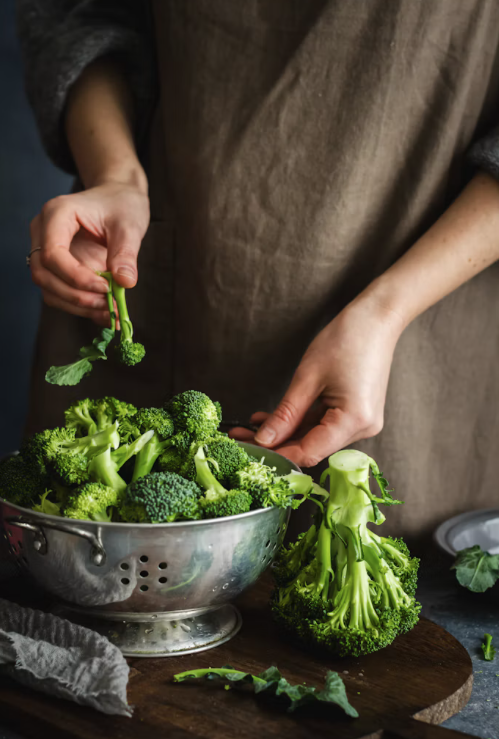
Once I stopped piling my plates high, the money I had been spending on sheer quantity started going into quality instead. A smaller piece of grass fed beef that actually tastes of something. Wild or responsibly farmed fish. Eggs from hens that have seen a field. An olive oil good enough to catch, peppery, at the back of your throat. Vegetables in season, when they're cheaper and taste the way they're meant to.
Steak still has its place in my week, and I look forward to it. I buy a good one, trim off the thick edge of fat, cook it on high heat in a little olive oil and in a hot oven and let it rest. It shares the plate with a generous heap of greens, and that's dinner. One really good steak does more for me than three ordinary ones.
The fat I keep an eye on is saturated fat. Most of it comes from fatty cuts of meat, butter, cream and cheese, and from the pastries, pies and processed meats that don't make it into my basket anyway. The NHS advises cutting down on it and swapping some for unsaturated fats, the kind in olive and rapeseed oil, nuts, seeds, avocado and oily fish, because that swap helps bring cholesterol down. A Cochrane review of trials lasting at least two years found that people who cut back on saturated fat had fewer cardiovascular events overall, counting heart attacks, strokes and similar together, though it made little difference to overall deaths.
So in my kitchen olive oil is the everyday fat. Butter, cream and cheese are still there, but as flavour: a knob melted over spring greens, a little Parmesan grated over the top, never the base of the meal. Fewer of them, and better ones.
Where the plate isn't the whole answer
I'm a food-first person through and through, but I'd be doing you a disservice if I pretended food covers everything for everyone.
Vitamin D is the obvious one in the UK. We make most of ours from sunlight on our skin, and from October to early March the sun here is simply too weak for that. Oily fish, eggs and red meat help, but it's hard to get enough from food alone. That's why the NHS advises everyone to consider a daily vitamin D supplement through autumn and winter. It's late October as I write this, so this is very much the season.
A couple of other gaps are worth knowing about. B12 comes almost entirely from animal foods, so if you eat few or none, it's a conversation to have. And if you avoid dairy and fish, iodine is easy to miss, because in the UK milk is one of the main places we get it.
If you're in treatment, or you take any regular medication, please check any supplement with your doctor or care team before you start it. I still ask mine about anything new, even a face cream. Some things that are harmless for most people can interact with treatment, and your team knows your body's whole picture.
Fewer things, done well
The woman with five foods on her breakfast plate wasn't wrong to care. She was right to care, and she was frightened, and she was trying to do everything at once. If that sounds like you, I'd gently suggest you try what helped me: let the week do the heavy lifting, and let each plate be a normal size again.
The fight still matters to me every single day. I just don't have to win it at every meal.
Want to try it?
One Plate at a Time, our free 28-day guide, builds this way of eating one meal at a time.
If you'd like the planning done for you, our meal plans put a balanced week together for your household, recipes included.
The content shared by The Metabolic Kitchen Diaries is for general educational and informational purposes only. Nothing on this platform constitutes medical advice, diagnosis, or treatment. Please consult your GP, oncologist, or a qualified healthcare professional before making significant changes to your diet, especially if you have a health condition, are undergoing treatment, or take regular medication. Every body is different. What works for one person may not work for another. The Metabolic Kitchen Diaries encourages individual experimentation, curiosity, and self-awareness — with professional guidance where appropriate.
Sources
McDonald D, et al. American Gut: an open platform for citizen science microbiome research. mSystems, 2018;3(3):e00031-18. Observational; volunteers self-reported their diets, mostly in the US, UK and Australia.
Rolls BJ, Roe LS, Meengs JS. Larger portion sizes lead to a sustained increase in energy intake over 2 days. Journal of the American Dietetic Association, 2006;106(4):543–549. 32 adults.
Rolls BJ, Roe LS, Meengs JS. The effect of large portion sizes on energy intake is sustained for 11 days. Obesity, 2007;15(6):1535–1543.
Shukla AP, et al. Food order has a significant impact on postprandial glucose and insulin levels. Diabetes Care, 2015;38(7):e98–e99. Small study, adults with type 2 diabetes.
Hooper L, et al. Reduction in saturated fat intake for cardiovascular disease. Cochrane Database of Systematic Reviews, 2020, Issue 5, CD011737. 15 randomised trials, around 59,000 participants.
NHS. Fat: the facts.
NHS. Fish and shellfish.
NHS. Vitamin D.