
Why I Watch Blood Sugar, and Not Much Else
Same bread, same morning, same kitchen table. I have a slice of good sourdough with my eggs and stay more or less level for the rest of the morning. My husband has the same slice and, an hour later, he's back in the cupboard. For years I'd have put that down to willpower, or appetite, or him being a man who likes bread. Then we both wore glucose sensors for a fortnight, watched my own morning line stay flat, and finally understood what his hour-later hunger had been telling me all along. Same bread. Different bodies.
That fortnight is the reason this whole site keeps coming back to one measurement. People ask me, quite reasonably, why I make such a fuss about blood sugar when there's so much else going on in a body after a meal. Here's my answer.
It's the only thing (today) you can see straight away
When you eat, a great deal changes. Blood fats rise and fall. Insulin is released. Hormones that govern hunger and fullness shift, the gut gets busy, and inflammation quietly nudges one way or the other. All of that matters, and almost none of it is visible to you. You'd need a blood draw, a lab and a few days' wait to know what your triglycerides did after lunch, by which point you've eaten nine more meals.
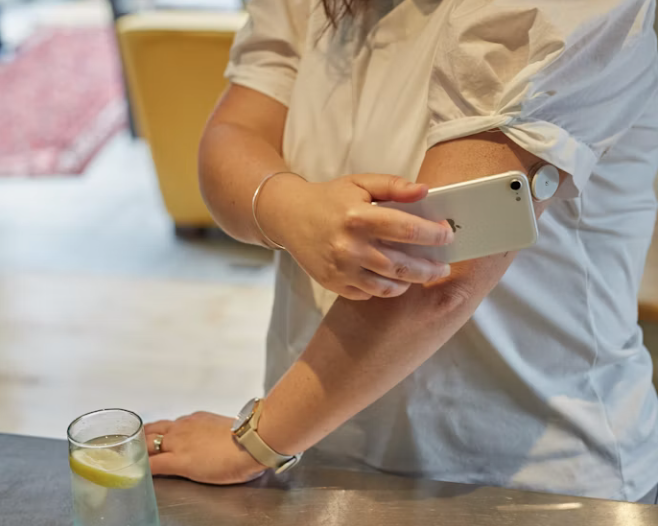
Glucose is different. It moves within minutes of a meal, it peaks within the hour, and you can watch it happen with a small sensor on the back of your arm, or feel it happen if you know what to look for. It's the one metabolic response available to us today that gives you an answer while the answer is still useful. You ate the thing; here's what it did. Tomorrow, try it with a walk afterwards, or with the eggs first, and see if the answer changes.
No other marker gives you that loop. So it's where I start, and it's where I tell everyone else to start, not because glucose is the whole story but because it's the only marker visible and actionable.
It's a number, not an opinion
I spent a long time being told how I should feel after eating. "That's a healthy breakfast." "You can't be hungry, you've just had lunch." The trouble with all of that is that it's somebody's opinion, sometimes my own, and opinions are easy to argue with at four in the afternoon when the biscuit tin is talking.
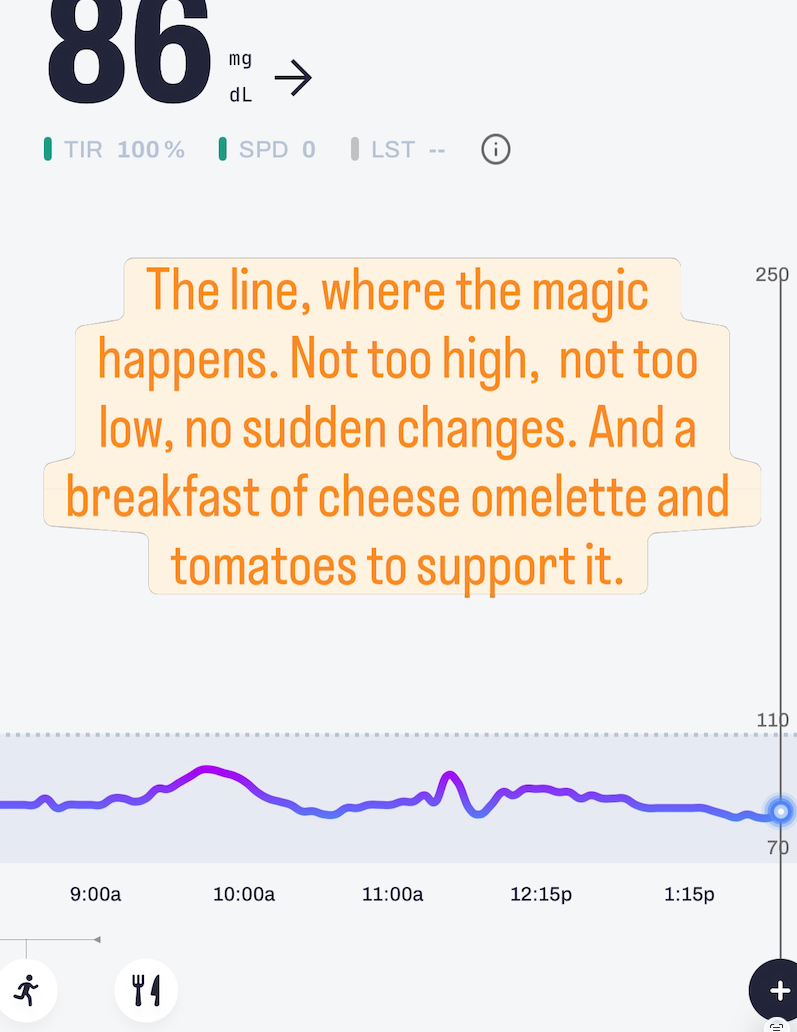
A glucose reading isn't an opinion. It just reports. I don't chase numbers and I don't publish targets, because a number without context is its own kind of trap.
But the shape of a curve after a meal, whether it climbed like a hill or a cliff, whether it came down gently or fell through the floor, is honest in a way that food labels and good intentions never quite are. And when a body has spent years being talked over, a little honesty is a relief.
The same meal is never the same meal
This is the part that surprised me most, and it's the reason I'll never hand anyone a list of good foods and bad foods.
How your body handles a plate depends on far more than what's on it. How you slept. Your sex. Your age. Whether you ate it slowly at a table or standing up in four minutes between meetings. Whether you moved afterwards. What time of day it was. Two people eating the same lunch will get different curves, and the same person eating it on a Tuesday and a Saturday might too.
A few of mine, since this is a diary. A handful of blueberries at breakfast, sitting on thick yoghurt with a scatter of nuts, is one of the gentlest things I eat. The same handful in the evening, on its own, after a long day, sent me on a climb I wasn't expecting. Same fruit, same person, same week. The difference was the hour and the company it kept.
Then there's the meal I fully expected to misbehave, a proper plate of something starchy, which I ate and then walked the dog for twenty minutes. The curve barely bothered. Working muscles had taken up a good share of what would otherwise have been left circulating. I've seen it often enough now that I no longer think of the after-dinner stroll as optional.
I'll add one honest caution, because the sensor can flatter as well as inform. A walk can make a pastry look better on the graph than it deserves. The number is a signal about the food and everything around it, not a verdict on the food alone. That's why I still build meals on protein, fat and fibre first and use the curve to fine-tune, rather than the other way round.
If you don't have a sensor
Your body has been reporting on your meals your whole life; the sensor just puts subtitles on it.
The afternoon slump that arrives like a tide at three. Being hungry again ninety minutes after a bowl of cereal. The pull towards something sweet after dinner that feels less like a want and more like an instruction. Waking at three in the morning after a late, heavy, carb-led supper. A short temper before lunch. None of these is a diagnosis, and not every tired afternoon is a spike. But for a great many people, that's the curve talking, and it's worth learning its voice.
Keep a diary for two weeks. Three words a day will do: what you ate, how you felt an hour or two later. Then change one thing, the order, the timing, the walk, the eggs on the toast, and see what shifts. That's the whole method. It's what I did at my own kitchen table before I owned anything with a sensor in it.
So this is why
Blood sugar isn't the only thing that matters. It's the one thing that answers back quickly, in plain numbers or plain feelings, and it's the one you can change at the very next meal. It made me pay attention to my own body instead of to the packet, and it turned "healthy eating" from something I was told about into something I could test.
That's what I'd like for you: not my curve, yours. If you want the long version of how all this fits together, the free guide is the place to start, and it works without any equipment at all. And if you do decide to wear a sensor for a fortnight and find yourself staring at a screen full of lines wondering what on earth they mean, that's exactly what CGM Compass is for. Fifty minutes, the two of us, and your own data on the table.
Same bread, different bodies. It's a small thing to know about yourself. It changes a lot.
IMPORTANT NOTICE
The content shared by The Metabolic Kitchen Diaries is for general educational and informational purposes only. I am not a doctor, registered dietitian, or medical professional. Everything shared here is based on personal experience, self-experimentation, and publicly available nutritional research. Nothing on this platform constitutes medical advice, diagnosis, or treatment. Please consult your GP, oncologist, or a qualified healthcare professional before making significant changes to your diet, especially if you have a health condition, are undergoing treatment, or take regular medication. Every body is different. What works for one person may not work for another. The Metabolic Kitchen Diaries encourages individual experimentation, curiosity, and self-awareness, with professional guidance where appropriate.
The Metabolic Kitchen Diaries · metabolic.kitchen · @themetabolickitchendiaries