
Your gut microbes are part of your blood sugar response
I've been back at school this month, doing a nutrition course at Imperial College Business School to refresh the science behind what I do here. One study came up that I can't stop thinking about, because it explains something I've watched on my own glucose monitor.
The bread experiment
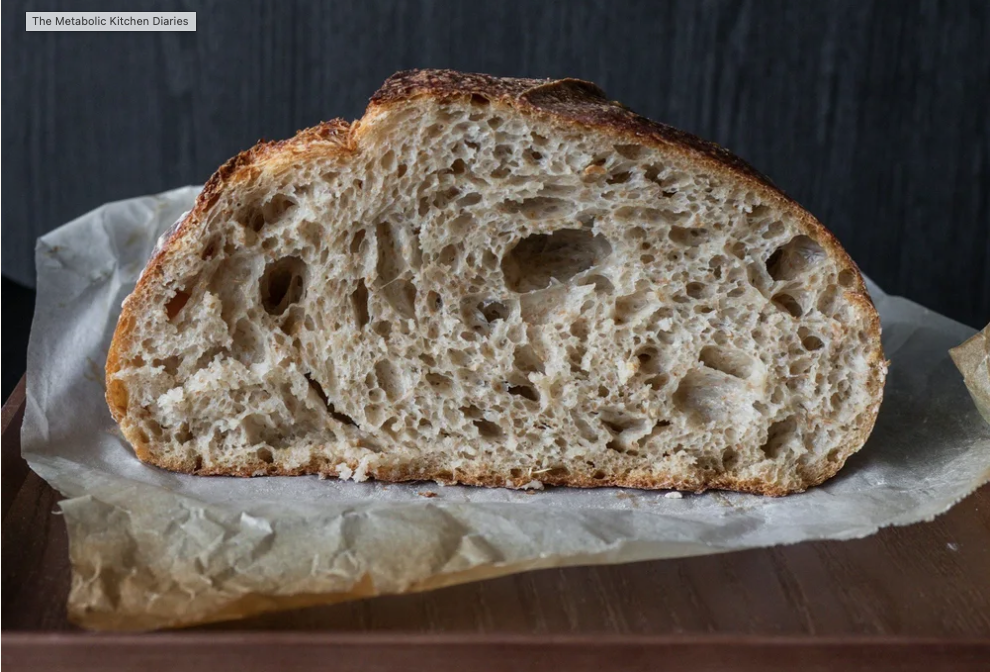
In 2017 a research group in Israel gave twenty people white bread for a week and wholegrain sourdough for a week, and measured their blood sugar after eating. You'd expect the sourdough to win. On average, it didn't. The two breads came out the same.
But the average was hiding the interesting part. About half the people had a gentler response to the white bread, and half to the sourdough. And the researchers could tell in advance which bread would suit which person, not from their age or weight or genes, but from the bacteria living in their gut.
Why your microbes matter here
Trillions of tiny helpers live in your large intestine, and they eat what you can't: the fibre in vegetables, beans, seeds and whole grains. When they ferment it, they make compounds that feed the gut lining, calm inflammation and nudge the gut to release a hormone called GLP-1.
Your body makes GLP-1 naturally after a meal. It slows how fast your stomach empties, steadies your blood sugar and tells your brain you've had enough. A fibre-rich plate is one of the simplest ways to encourage your own supply.
Different people have different communities of microbes, so the same slice of bread can release its sugars faster in one person and slower in another. That's a big part of why two people can eat the same meal and feel completely different an hour later. Your microbes are part of your blood sugar response.
They're not the whole story. What's on the plate, what you ate before, how you slept and what time of day it is all matter more. But the microbes are in the mix, and they're one of the few parts of the mix you can change through food.
The loop
Here's the part I love. Fibre feeds your microbes. Well-fed microbes help flatten your blood sugar curve. So fibre works twice: once on the way in, by slowing how quickly a meal's sugars reach your blood, and again later, through the microbes it feeds.
That's why fibre is one of the three things I build every meal around, alongside protein and fat. It's not a rule about bread. It's a habit of putting vegetables, pulses, nuts and seeds on the plate first and letting the starch follow.
What this means for how I work
The bread study needed a laboratory to tell people which bread suited them. You don't. A week of noticing how you feel after a meal, your energy, your fullness, whether you're hungry again in an hour, tells you a great deal. If you use a glucose monitor, it tells you the same thing in numbers.
This is the whole idea behind The Metabolic Kitchen Diaries. My meal plans are built on protein, fat and fibre at every meal, sequenced so starch comes last, with plenty of variety to keep your microbes fed. They're a starting point, not a prescription. The rest is you paying attention to your own body, because every body is different, and the science keeps confirming it.
Start small. Add one more plant to tomorrow's dinner. Eat the vegetables before the bread. Notice how you feel. Your microbes will notice too.
Sources: Korem T. et al., "Bread affects clinical parameters and induces gut microbiome-associated personal glycemic responses", Cell Metabolism, 2017. Valdes A.M. et al., "Role of the gut microbiota in nutrition and health", BMJ, 2018 (open access).
IMPORTANT NOTICE
The content shared by The Metabolic Kitchen Diaries is for general educational and informational purposes only. I am not a doctor, registered dietitian, or medical professional. Everything shared here is based on personal experience, self-experimentation, and publicly available nutritional research. Nothing on this platform constitutes medical advice, diagnosis, or treatment. Please consult your GP, oncologist, or a qualified healthcare professional before making significant changes to your diet, especially if you have a health condition, are undergoing treatment, or take regular medication. Every body is different. What works for one person may not work for another. The Metabolic Kitchen Diaries encourages individual experimentation, curiosity, and self-awareness, with professional guidance where appropriate.